What is Nyepi and Why You Should Experience It in Bali
Discover what Nyepi is, why Bali shuts down for 24 hours, and the traditions behind the island’s famous Day of Silence.

In This Guide
What is Nyepi? Bali’s Day of Silence Explained
Bali is known for vibrant ceremonies, colorful temple festivals, and lively celebrations. Yet once a year, the island does something completely different. Everything stops.
Nyepi, often called the Balinese Day of Silence, marks the Balinese New Year according to the Saka lunar calendar. For 24 hours, the entire island shuts down. Roads fall silent, businesses close, beaches empty, and even the airport stops operating.
For travelers who arrive expecting beach clubs and bustling cafés, the experience can feel surprising at first. But Nyepi is far more than a temporary shutdown. It is a deeply spiritual tradition centered on reflection, renewal, and restoring balance between humans, nature, and the divine. Understanding what Nyepi is helps visitors appreciate one of the most meaningful cultural traditions in Bali, and it also helps them plan their travel schedules accordingly.
Nyepi Explained in 60 Seconds
Nyepi is the Balinese Hindu Day of Silence celebrating the Balinese New Year.
During this 24-hour holiday:
- The entire island of Bali shuts down
- No flights, no traffic, and no outdoor activities take place
- Lights and electricity are minimized across the island
- Tourists must remain inside their hotels or villas
- The day focuses on meditation, reflection, and spiritual cleansing
The silent day is preceded by dramatic Ogoh-Ogoh parades and followed by social traditions centered on forgiveness and renewal.
What is Nyepi?
Nyepi is the Balinese New Year celebration based on the Saka calendar, a lunar calendar used in Balinese Hinduism. Unlike Western New Year festivities filled with fireworks and parties, Nyepi takes the opposite approach. Instead of celebration, the holiday encourages silence, self-reflection, and spiritual reset.
The word “Nyepi” itself comes from the Balinese word meaning to keep silent. The goal is to create a day without distractions, allowing individuals to reflect on their actions and begin the new year with clarity.
Several key elements define Nyepi:
- It is observed primarily by Balinese Hindus
- The observance lasts exactly 24 hours
- It marks the start of a new spiritual cycle
- The entire island participates in the silence
With Bali’s population estimated at around 4.3 million residents, the scale of participation makes Nyepi one of the most remarkable cultural observances anywhere in the world.
When Does Nyepi Take Place?
Nyepi does not fall on a fixed date because it follows the Saka lunar calendar. As a result, the holiday typically occurs sometime between March and April each year.
Recent Nyepi dates include:
- 2023: March 22
- 2024: March 11
- 2025: March 29
The observance officially begins at 6:00 AM and ends at 6:00 AM the following day, covering a full 24 hours of silence across the island.
For travelers planning a visit to Bali, checking the Nyepi date is essential. Even major infrastructure, including the international airport, temporarily closes during the holiday.
Why is Nyepi Celebrated?
At its core, Nyepi is about spiritual purification and renewal. Balinese Hindus believe that silence helps cleanse negative energy accumulated during the past year. The philosophy behind the day connects closely to Tri Hita Karana, a central concept in Balinese culture that emphasizes harmony between three forces:
-
Pawongan: Harmony between humans and other people
-
Palemahan: Harmony between humans and nature
-
Parahyangan: Harmony between humans and the divine
Nyepi provides an opportunity to restore balance across these relationships. By pausing daily activities, the community symbolically resets both spiritually and socially. Many Balinese people use the day for meditation, prayer, and introspection. Some also practice fasting as a way to deepen spiritual focus.
The Four Nyepi Rules (Catur Brata Penyepian)
The quiet atmosphere of Nyepi is guided by four traditional restrictions known as Catur Brata Penyepian. These rules shape how the day is observed across Bali.
The four restrictions are:
- Amati Geni – No fire or lights, and electricity should be minimized
- Amati Karya – No working or economic activity
- Amati Lelungan – No traveling or leaving home
- Amati Lelanguan – No entertainment or recreational activities
These practices create a rare moment when daily life pauses completely. Streets remain empty, traffic disappears, and even the night sky becomes clearer due to reduced lighting.
What Happens in Bali During Nyepi?
Nyepi affects every corner of the island. Daily life stops almost entirely, creating a level of silence rarely seen in modern destinations.
During Nyepi:
- Ngurah Rai International Airport closes completely
- No flights arrive or depart for 24 hours
- Public transportation stops operating
- Shops, restaurants, and attractions remain closed
- Beaches and streets are empty
The airport closure is particularly notable. The airport normally handles tens of millions of passengers each year, yet it pauses operations entirely for Nyepi.
Security volunteers known as Pecalang patrol local neighborhoods to ensure the rules are respected. These traditional community officers help maintain the peaceful atmosphere of the day.
Do Tourists Have to Follow Nyepi Rules?
Yes. Visitors in Bali must respect Nyepi regulations while the holiday is observed.
Tourists are typically required to remain inside their accommodation throughout the day. Hotels, resorts, and villas coordinate with local authorities to ensure guests follow the guidelines.
Common hotel rules during Nyepi include:
- Guests must stay within the property grounds
- Outdoor lighting is reduced
- Loud music and parties are prohibited
- Leaving the hotel or villa is not allowed
Despite these restrictions, most hotels still provide services to ensure guests remain comfortable. Restaurants may operate quietly within the property, and indoor activities are usually available.
Some premium resorts even design special Nyepi experiences that emphasize wellness, meditation, and relaxation.
The Night Before Nyepi: Ogoh-Ogoh Parades
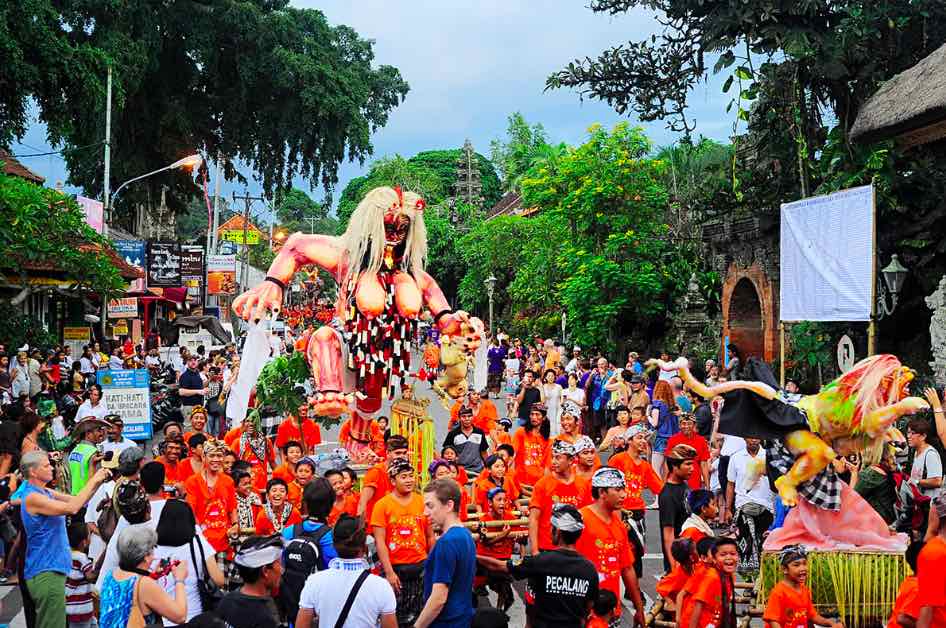
While Nyepi itself is silent, the evening before is one of the most dramatic cultural events in Bali. Communities across the island build towering statues known as Ogoh-Ogoh, large sculptures made from bamboo and paper-mâché. These figures represent negative forces or evil spirits.
During the parade:
- Giant Ogoh-Ogoh statues are carried through the streets
- Traditional music and chanting accompany the procession
- Crowds gather to watch the performances
At the end of the night, many statues are burned in symbolic rituals meant to eliminate negative energy before the new year begins. The lively atmosphere creates a striking contrast to the quiet that follows the next morning.
What Happens After Nyepi?
The day after Nyepi is known as Ngembak Geni, which marks the return of normal life. On this day, people reconnect with friends, family members, and neighbors. One of the most meaningful traditions involves asking for forgiveness and resolving past conflicts.
Typical Ngembak Geni activities include:
- Visiting relatives and loved ones
- Sharing meals together
- Rebuilding relationships through forgiveness
- Celebrating the beginning of a new year
The transition from silence to social connection reflects the deeper purpose of Nyepi, which is to begin the new year with renewed harmony.
Why Nyepi Is Unique in the World
Many cultural holidays involve reflection, but Nyepi stands apart because an entire island participates in the silence.
Several factors make the day extraordinary:
- An international airport fully shuts down
- Millions of residents observe strict silence
- Roads and beaches become completely empty
- Light pollution drops dramatically at night
Because lighting is minimized across the island, Nyepi nights often reveal exceptionally clear views of the stars and even the Milky Way. Satellite images of Bali taken during Nyepi sometimes show the island appearing noticeably darker compared with surrounding regions.
Tips for Travelers Visiting Bali During Nyepi
For travelers, experiencing Nyepi can be both unusual and unforgettable. With a little preparation, the day can become a peaceful highlight of your Bali journey.
-
Book flights carefully: Ensure your arrival and departure dates do not fall within the 24-hour Nyepi window (6:00 AM to 6:00 AM).
-
Stock up on essentials: Buy snacks, personal items, and groceries the day before, as all shops and markets will be closed.
-
Choose the right accommodation: If you want full service, stay at a hotel or resort. If you prefer cooking and quiet freedom, rent a private villa.
-
Embrace the digital detox: Use the uninterrupted quiet to read, meditate, practice yoga, or gaze at the night sky.
Final Toughts
Nyepi is the Balinese New Year celebration known as the Day of Silence, and it remains one of the most remarkable cultural traditions in the world.
The key things to know:
- Nyepi marks the Balinese New Year based on the Saka calendar
- The entire island shuts down for 24 hours
- Four traditional rules restrict light, work, travel, and entertainment
- Flights stop and the airport temporarily closes
- The day focuses on reflection, meditation, and spiritual renewal
- Ogoh-Ogoh parades occur the night before, while forgiveness rituals follow the next day
For travelers planning a visit to Bali, understanding Nyepi is essential. The island may pause for a day, but the cultural insight and atmosphere it offers are unforgettable.
Yes. Emergency services, including ambulances and hospitals, remain fully operational during Nyepi. If a medical emergency occurs, the traditional community security (Pecalang) will assist in coordinating safe transport to the nearest hospital.
While mobile data and fiber broadband services used to be partially throttled by the government in previous years, home Wi-Fi networks in hotels and villas generally remain operational. However, guests are asked to refrain from streaming loud content that could disturb neighbors.
No. Ngurah Rai International Airport (DPS) is completely closed for 24 hours starting from 6:00 AM on Nyepi morning. No commercial flights are permitted to land or take off during this window, with exceptions made only for emergency landings or medical evacuations.
No. All public areas, including beaches, streets, and hiking trails, are strictly off-limits to everyone. Local Pecalang officers patrol these areas to enforce the rules. All activities must be kept within private hotel or villa grounds.
If a tourist leaves their hotel or generates excessive light/noise, they will be stopped by the Pecalang. Transgressors are typically given a polite warning and escorted back to their accommodation. In severe cases, traditional sanctions or police intervention may occur. Nyepi is far more than a public holiday; it is an extraordinary cultural reset that showcases the depth of Balinese tradition. By pausing the demands of modern life for a single day, the island cleanses its environment, reconnects its people, and honors its spiritual heritage. For travelers willing to pause along with it, Nyepi offers a rare opportunity to experience true silence, breathtaking night skies, and an unforgettable sense of peace.
The best villas, before they're booked.
Join 12,000 travellers getting new stays & direct-booking deals monthly.
Ready to book your next escape?
Every villa here is managed and bookable directly through Villas R Us — meaning the best rate, a real human on WhatsApp, and staff who'll have your workspace and Wi-Fi sorted before you land.
Other Articles